California Property Records
Property records constitute official public documents that furnish information about land and real estate holdings. Their maintenance typically falls under the jurisdiction of local governmental entities, such as county recorders, registrars, or clerks, depending on regional governance structures.
In California, recorded property documents fundamentally uphold transparency and stability in real estate transactions. They provide essential information that facilitates verification of legal ownership, identification of encumbrances, and examination of a property's historical background prior to any decisions involving real estate transactions.
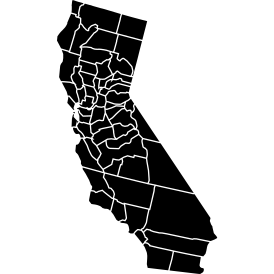
Each of the state's 58 counties has a recorder's office responsible for maintaining its own registry of deeds and other property-related filings. Property owners, prospective purchasers, and researchers can connect with these agencies to access registries of deeds, conveyances, and other property-related filings in accordance with California statutory requirements.
Introduction to Property Records
Property records in California begin with Spanish and Mexican land grants in the 18th century. After the U.S. annexed California, many of these grants were confirmed under the Land Act of 1851. Today, county archives continue to preserve property records from the mid-1800s, revealing settlement patterns, transfers, and claims that shaped the state's development.
California follows a deed recording system, where ownership is established through recorded deeds rather than a title registration model. In this system, records are not maintained at the state level. Instead, the state's county recorder's offices preserve property documents such as deeds, liens, and subdivision maps.
In recent decades, counties have made significant investments in digitization projects. Many offices now provide searchable online databases and GIS parcel mapping tools, which expand public access while protecting fragile historical records. Availability of these services can vary by county.
Beyond ownership tracking, property records serve critical roles in tax assessment and local governance. County assessors rely on them to have reliable valuations, which directly influence local revenues that support schools, cities, and public services.
Moreover, agencies rely on these records to confirm zoning compliance and coastal restrictions and to oversee resource allocation. In California, where water rights, agricultural zoning, and oil and gas leases are frequent concerns, property documentation is indispensable for growth while protecting the state's natural resources.
What Counts as Property Records in California
California property records cover a variety of document types that reflect property ownership, encumbrances, valuation, land use, and legal rights. Below are the primary property record types you can access:
Deeds & Title Records
Deeds and title records form the foundation of property ownership in California. These documents account for millions of real estate instruments annually, which are recorded as grant deeds or quitclaim deeds. California counties preserve these records dating back to the mid-1800s, with Los Angeles County having records dating to 1851.
Ownership History & Transfers
Ownership history and transfer records document a property's chain of ownership. In California, a significant number of transfers are recorded each year, with some parcels changing hands multiple times over decades. These records can be obtained through county recorder's offices to trace prior owners, confirm legal title, and analyze local real estate trends.
Mortgage & Loan Documents
These documents refer to recorded instruments, such as deeds of trust and mortgages, that secure real property as collateral. In California, most home purchases rely on financing rather than cash. The average monthly mortgage payments vary by location and loan terms.
Property Tax Records & Assessments
These records track assessed property values, tax obligations, and exemptions. California law, through Proposition 13, places a cap of 1% on property tax rates based on market value. This generates billions of dollars in revenue from property taxes annually. Exemptions, such as the homeowners' exemption and special relief for veterans, are available to ease the tax burden.
Property Values & Market Data
Property values and market data track sale prices, appraisals, and long-term trends. California's median home value is about $762,000, while the average annual appreciation and sales trends vary regionally. These figures help assessors, planners, and buyers understand property markets and shifting real estate conditions.
Building Permits & Zoning Records
These records document approvals for construction, remodeling, and land use. City and county building departments issue permits, the number of which varies annually. Meanwhile, local planning or zoning offices oversee land-use regulations. Records from these agencies can provide compliance with safety codes, environmental standards, and zoning laws.
Liens, Foreclosures & Judgments
Liens, foreclosures, and judgments are recorded claims or legal actions attached to real property. While the yearly foreclosure filings are not aggregated in a statewide report, California county recorders routinely record numerous tax liens and judgments. These records can identify which properties are subject to financial stress or legal claims.
Parcel Maps & Land Surveys
Parcel maps and land surveys delineate properties' boundaries and dimensions. Each county tracks the number of parcels it oversees and makes parcel maps, often through GIS platforms. Besides county resources, numerous tools are available to help verify parcel descriptions, like the Parcel Locator offered by the Southern California Association of Governments (SCAG).
California Property Law
California property law establishes the guidelines for ownership rights, land transfers, and state real estate regulation. It combines statutory codes, constitutional provisions, and case law to maintain a clear public record while considering private property rights and public interests.
Below are the primary statutes and regulations relevant to property matters in the state:
Key Statutory Framework
The California Civil Code provides provisions regarding real property ownership, conveyances, easements, and related matters in the state. In addition, the California Government Code addresses public access to property records, while the California Revenue and Taxation Code governs property assessments, taxation, and liens.
The California Code of Civil Procedure also establishes rules for foreclosures, judgments, and enforcing liens that affect real estate.
Deeds and Transfers
Deeds are the primary legal instruments used to transfer real property in California. To be legally binding, a deed must be in writing, signed, and delivered to the new owner.
To protect the grantee's rights against third parties, California law requires that deeds be recorded in the county where the property is located. This is governed by the California Government Code § 27279 - § 27297.7, which directs county recorders to accept properly formatted deeds and related instruments.
Grant deeds are the most common form, as they include an implied warranty that the property has not been sold to another party and is free of undisclosed encumbrances. Quitclaim deeds, in contrast, convey only the grantor's interest without warranty.
Deeds of Trust and Mortgage
In California, deeds of trust are the predominant security instrument used for property loans, though mortgages also exist under state law. Both instruments create a lien against the property to secure loan repayment.
The California Civil Code § 2920 through § 2955 covers how such instruments must be recorded, the rights and duties of lenders, borrowers, and trustees, and the steps required for foreclosure through a power of sale, protections for borrowers, and the process for releasing the lien once the obligation is satisfied.
Easements
Easements grant limited rights for one party to use another's land for specific purposes, such as access roads, utility lines, or drainage.
The California Civil Code § 801 - § 813 defines the various easements, including express easements, implied easements, easements by necessity, and prescriptive easements. Easements can be appurtenant, benefiting adjacent land, or in gross, benefiting an individual or entity without regard to ownership of neighboring land.
California courts strictly interpret easements to balance property rights between landowners and users.
Zoning and Land Use
California requires all cities and counties to adopt general plans that guide long-term development. Under the California Government Code § 65300 through § 65907, these plans must include land use, housing, conservation, and safety.
Local zoning ordinances implement these plans by specifying allowable uses and regulating density, building height, setbacks, and environmental protections. Moreover, local planning commissions and zoning boards are tasked with issuing permits, handling variance requests, and enforcing compliance.
Since California faces unique challenges like wildfire risk, coastal protection, and housing shortages, zoning laws prove crucial for balancing growth with environmental sustainability and community needs.
Public Records Act
The California Public Records Act (Gov. Code § 7920 - § 7931) provides public access to property-related documents such as deeds, liens, maps, and subdivision records. County recorder's offices are obligated to provide access to these records for transparency in property transactions.
Many counties in the state have expanded accessibility by digitizing their archives, offering searchable online systems that allow the public to access documents remotely. Fees may apply for certified copies or extensive searches.
Note that not all property records are public. State laws apply restrictions to protect privacy and security. Among the protected information are the following:
Records tied to critical infrastructure or secure facilities
Records under pending litigation or investigation
Personal identifiers like Social Security Number
Home addresses of protected individuals
The Role of Government Agencies
California property record maintenance is handled by several agencies, each contributing a distinct role in documenting, valuing, regulating, and making property information accessible.
The county recorder is responsible for recording and preserving deeds, mortgages, liens, easements, maps, and other legal instruments affecting real property. Complementing that, the county assessor identifies, maps, and values all taxable real property.
For each parcel, the assessor maintains records of property descriptions, ownership, and assessed value, or valuation changes due to transfers or improvements. This data feeds into tax rolls used by the county tax collector to generate tax bills, manage delinquencies, and, when necessary, initiate tax lien procedures.
California courts sometimes intervene in property disputes, quiet title actions, or foreclosure litigation. The county recorder's system often records their judgments to affect the title or create liens.
At the municipal level, city or county planning and building departments maintain zoning, land-use, and permitting records. Although these documents do not establish ownership, they regulate how property may be used or developed.
How to Access Property Records
California provides several ways for the public to access recorded property documents, though availability varies by county:
Online
Many counties across the state offer searchable databases and GIS maps. For example, the Marin County Recorder provides the Recorder Index Search, which allows property files to be looked up by name, document number, book, and type.
In Person
California public property documents can also be viewed in person at the county recorder's office. The County Recorders Association of California provides a full directory of offices statewide.
By Mail
Many counties allow requests through forms with associated fees. For instance, the San Francisco Assessor-Recorder provides a mail request form. You must fill out this form and send it along with a payment and a self-addressed stamped envelope to the office.
By Phone
Recorder or assessor offices can confirm the availability of specific documents and explain request procedures. Phone numbers can be found on their official website.
Limitations of Accessing Property Records
While California real estate records are public, some limitations affect how and when they can be accessed. Records are primarily managed at the county level, meaning procedures, availability, and formats differ across jurisdictions. In addition, privacy laws, fees, and technology constraints may restrict full or immediate access to certain documents.
County-by-County Availability: California does not maintain a centralized statewide property record system. Access, formats, and search tools vary by county.
Restricted Information: Certain records are protected from public disclosure, specifically if they include sensitive details.
Fees and Processing Times: Copies of deeds, liens, or surveys often require payment, and processing times may differ based on request method (online, mail, or in person).
Historical Records Access: While some archives date back to the mid-1800s, older documents may only be available on microfilm or require in-person visits.
Limited Online Search Tools: Not all counties provide full document images online; many only offer index searches, requiring a formal request for copies.
Verification Requirements: Some counties require requesters to provide exact recording numbers or detailed property information, which can make locating records more challenging.
How Property Records Are Updated
California recorded property files are continually updated to reflect changes in ownership, encumbrances, or property use. The timing of the updates depends on the record type and the government office responsible for maintaining it.
Property Sales or Transfers: When a deed is filed with a county recorder's office, the ownership record is updated almost immediately, usually within a few business days of recording.
Mortgages and Liens: New loans, liens, or releases are recorded with county recorders and reflected in the public record as soon as the document is processed, typically within days.
Building Permits: When permits are approved, local building or planning departments record new construction, additions, or alterations. These permit records typically update on the same day or shortly thereafter in local permit databases (city/county level).
Assessor Valuation Updates (for Taxes): County assessors review and update property values annually to maintain valid tax rolls. All taxable property is reassessed each year as of the lien date (January 1). Additionally, specific events trigger additional assessments, which adjust the assessed value for the remainder of the fiscal year.
Court Judgments and Foreclosures: Court actions such as foreclosure sales or quiet title judgments are updated once final orders are recorded. Depending on the case, this process may take weeks or months, but records are updated promptly once the court files the judgment with the recorder.
The Importance of Property Records
Property ownership records in California are not just administrative documents; they serve as valuable tools for different groups of people involved in property transactions:
Homebuyers and Sellers: Depend on recorded property documents to verify legal ownership, uncover liens, and ensure that transfers are valid before closing a deal.
Property Owners: Use records to confirm boundaries, claim property tax exemptions, or dispute inaccurate assessments.
Lenders and Mortgage Companies: Rely on mortgages and lien filings to secure their interests and assess borrower reliability.
Attorneys and Courts: Reference deeds, foreclosure filings, and easement records when handling legal ownership or land use disputes.
Developers and Builders: Consult zoning maps, building permits, and surveys to guide construction projects and comply with local regulations.
Local Governments: Depend on updated ownership and assessment rolls to levy taxes, enforce zoning, and plan infrastructure.
Real Estate Professionals: Agents, brokers, and appraisers rely on ownership histories, transfer patterns, and market data to evaluate property value and advise their clients accordingly.
What Information Do California Property Records Contain?
California public property records provide a detailed and verifiable account of real estate ownership, transactions, and legal obligations. The following information is typically included:
Ownership Details: Names of current and prior owners, including joint owners, trust ownership, or corporate entities
Property Description: Parcel's legal details, such as lot and block numbers, subdivision name, and its assessor parcel number (APN)
Transfer Information: Method and date of property transfer, along with the terms of the conveyance
Financial Obligations: Outstanding or released mortgages, deeds of trust, tax debts, mechanic's liens, and other recorded claims against the property
Use Restrictions: Easements, covenants, restrictions, or rights-of-way that may limit or define how the property can be used
Tax Records: Property's assessed value, applied tax rate, eligible exemptions, and past tax assessments
Land Use and Development: Records of building permits, construction or remodeling activity, land-use designations, and zoning classifications.
Legal Actions: Notices of default, foreclosure filings, or court judgments that affect the property's ownership or marketability
Parcel Boundaries: Official maps and surveys showing property lines, lot dimensions, and topographical features
Recorded History: A chronological log of all filings made with the county recorder concerning the property
Resolving Property Disputes
Property disputes in California often arise from boundary disagreements, unclear property titles, or conflicting land use claims. Such conflicts can escalate into legal challenges, which can affect property rights and relationships.
Property ownership records are pivotal in resolving disputes. They provide verifiable evidence of ownership, historical transactions, and legal encumbrances. This information can help parties and legal representatives clarify claims and establish rights.
Disputes can be resolved through several methods:
Mediation: Involves a neutral third party who facilitates negotiations between parties to reach a mutually acceptable solution, often saving time and money.
Arbitration: A more formal process where an arbitrator hears the arguments and issues a binding decision.
Litigation: Allows parties to bring the dispute before a California court, where a judge or jury will determine the outcome based on evidence, including property records.
In California, numerous private dispute resolution providers are available to help navigate the process. The California Department of Real Estate (DRE) can also provide guidance and a Complaint Resolution Program for disputes involving real estate professionals.
FAQs
Yes, when a property is subdivided, the county recorder issues new parcel numbers, updates maps, and records new deeds. Subdivision maps are critical for developers, surveyors, and buyers to confirm legal boundaries.
Certain records may indicate conservation easements, floodplain designations, or coastal development restrictions, which are recorded with the deed to inform future owners of limitations.
Yes, condominium plans must be recorded with the county recorder's office. According to California Civil Code § 4290, a certificate consenting to the recording of a condominium plan is required for condominium projects governed by a homeowners' association.
Easements allow others limited use of your property, such as for utilities or access. In California, you can check for this information in recorded deeds, subdivision maps, or separate agreements.
The sale price of a property can often be estimated from the amount of the documentary transfer tax shown on a deed. However, this amount may not accurately reflect the actual purchase price, as the tax is not charged on assumed loan amounts.
To change the name on a property title, you typically need to execute a new deed conveying the property from the current owner(s) to the new owner(s).
If you believe there is an error in a property record, you should contact the county recorder's office to request a correction.